Posts

Week 9

Image
As we come to the last lesson of this quarter,  we learn about the relationship between Space and art. Space is a mostly broad area of unfamiliar darkness. Artists were imagining what was in the unknown before the accomplishment of sending a man in a shuttle that orbits earth or even to the moon. After traveling into space and exploring the unknown, it became a huge topic in society and influenced the film industries. Scientist and artists have been considering what lies beyond Earth since the time of Copernicus and before then. Earth seemed to be lonely until scientists and artists were successful and placed a man on the moon. The Copernicus gave the idea of our solar system and it became a huge subject to artists and eventually TV shows and movies were created such as  The Jetsons and Star Trek . These shows were created to give the imagination of a happy view on space. The film industry took a slight twist and created films like Apollo 18 and Alien to give a scary tu...

Extra Credit Event

Image
I attended the final review session on 5/24/17. For the Blog Summary, we have to put all our blogs and events with pictures into one paper and write up a summary of what we learned this quarter. The summary goes at the beginning of the paper. (Keep everything in order and save as a PDF.) For the final paper: Use my major as a base 5-10 images  create an image patter.. sets up the next paragraph. put citations under pictures 1500-2000 words, double space 10 references, 20 bibliography  MLA format of references (References: the website that you pull information from.)

Event 3

Image
For my third event, I attended the Octopus Brain Storming on May 5 th at 11 am. I found this event very interesting but it was just simulation testings. I thought that if it was actual testings it would have been a lot easier to follow along with how the testings worked. In the picture to the right, I volunteered to go through the simulation test. I was a little disappointed that it was a simulation only because when we got to read more in depth I was really excited to test it out. The original test was meant for two people to hook up to electrodes and try to match similar brain wavelengths by creating a conversation without talking. The wavelengths were then to be shown through colored lights. The goal for the two people was to match up with the sam color tentacles that are touching. Also, music would play to try and fit the mood while the two people would seek to attempt to match brain wavelengths.   This event relates to the lesson of neuroscience a...

Week 8

Image
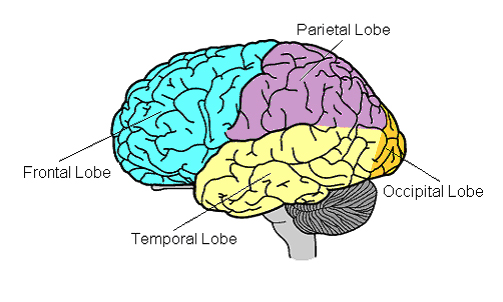
The connection between neuroscience and art seems to be very similar to me as medical technology and art. The topic of neuroscience is interesting because to learn about topics such as consciousness, unconsciousness, and how drugs can affect the way neuroscientists and artists have learned about the brain and the way it functions. Professor Vesna introduced the idea of consciousness through her lecture video and how it was founded.  Consciousness is simply the state of being conscious, or basically just meaning that someone is aware that you are alive and functioning. Consciousness was established by significant scientists, such as Franz Joseph Gall, Pierre Paul Broca, and Santiago Ramón y Cajal.  These scientists have a similar, but the different explanations of consciousness.           Unconsciousness was addressed in ProfessorVesnas second lecture video. I found this subject of matter to be most interesting because I've had the int...

Week 7

Image
Each of the scientists I learned about in the readings and lectures have played a big role in the collaboration of art and neurotechnology. Franz Joseph Gall created phrenology, the study of the shape and size of the cranium as a supposed indication of character and mental abilities. He was the first to make assumptions that the form of the skull can project aspects of your intellect and personality. Although he was wrong about shape contributing to a person’s attributes, it was discovered that certain areas of the brain have different functions. This was proven by Pierre Paul Borca, who did research on speech in the frontal lobe. Gall and Borca both played essential roles in building the foundation of psychology today. An example of an artist who has combined neuroscience and art is Susan Acker, who has worked on a project with sea sponges to help understand how the brain works. The sea sponges’ brains are made up of similar building blocks for nerve development, making the stu...

Event 2

Image
I attended the event on May 4, 2017, the "Chemical Entanglements: Gender and Exposure. Laura E. Gómez gave a welcome speech then Rachel C. Lee gave a short speech about the program. Florence Williams gave a lecture about the "burden of breasts." When I first walked in I had no idea what to expect or why they were even talking about breasts. Florence focused mostly on the history of breasts, the use of them, and why they are a burden to have.   The first part of Florence's lecture, she focused on her book. She started off with the history of the mammary glands and how sensitive they are. Humans evolved breasts on accident and mammary glands were originally developed for immune support. They are a disembodied organ. The mammary glands take blood and convert it into milk, but it never learned how to exclude what shouldn't be in there. Williams went on to explain she sent a sample of her breast milk to be tested for chemicals. From that sample, she shared that...

Week 6

Image
I never really understood how biotech could relate to art until this week. Biotechnology is the exploitation of biological processes for industrial and other purposes, especially the genetic manipulation of microorganisms for the production of antibiotics, hormones, etc. After listening to professor Vesna's lecture part two and the testings of lab rats and how they cross their genomes, it makes sense. Professor Vesna also mentions in her lecture that they do Blood wars. They take your white blood cells to test in hopes that people who donated will get a better understanding of how the white blood cells are used in our body to protect us. The artist's who work in this area spend a great amount of time and energy in their works. Artists are taking advantage of their ability to use biotechnology in their art and are using rats to test on and cross their genomes and make hybrids, cyborgs, etc to get the results that they want. This crossing does create some good because it ...

Week 4

Image
I never really viewed medicine and technology as art. This weeks lesson I find really interesting because I have had medical issues last year involving a knee injury. I had torn my ACL (Anterior Cruciate Ligament) and meniscus due to sports. I've had to get three MRI's because they could not tell if the ACL was torn. After seeing a doctor back at home and here at UCLA they all agreed to repair the meniscus then ACL, but due to how bad I tore my meniscus they thought it was in best interest to stage this surgery. I got my meniscus repaired at home during the summer of 2015 then when I got here to UCLA during summer school they fixed my ACL. During my rehab, I pushed myself too hard and ended up re-tearing my meniscus involving a third surgery. Medicine, tools, and technology are considered art according to Vesna's Lecture Pt.2. MRIs and X-Rays are is used to show organs and tissues within the body.  Silvia Casini states in her article, “MRI has a ‘look’ in the same wa...

Event Blog 1

Image
I attended the activity workshop on April 20, 2017. I had an interesting experience at this workshop because we got to look at materials that were not mass production. Everything in that workshop was found by a women, Linda Weintraub, who was from New York and she put everything in boxes and separated it throughout the room. Before entering the room we were given specific rules.    1. There was no talking.    2. we had to take our shoes off. She wanted us to get a feel with our feet of the ground. It was an awkward feeling because we would step on things that we would normally step on with shoes. We all then walked aound then room and split ourselves up into groups and sat around boxes. Each box had a different material inside. Each group also had different activities as well. Some of the hands-on activities involved touching feathers with our eyes closed and seeing ifwe could tell the difference between them. We looked at a honeycomb and then discussed w...

Week 3

Image
After last weeks unit, it gives me a better understanding of why this unit robotics does relate with art. There are many different types of robotics that are invented by artist. For example, robots and cyborgs. For me its interesting how someone can create such a thing that can interact with humans like in the video of the Homeless Robot. A lot of people didn't even realize that he was a robot till they took off his hat or even touched him. In professor Vesna's lecture, she mentions how the industrialization led up to robotics. In addition, the philosophers that she mentions in her first lecture have a huge impact and influence today's artist on robotics.  Figure 1: Cybrog                                                    ...

Week 2

Image
I have always thought math was a form of art. Math is used in a lot of graphics, for example, ratios, geometry, and simple basic math. In professor Vensa's lecture, she mentions that a lot of art majors hate math, but they use math on a daily basis whether they like it or not. Computers are what connect math and art. She also mentions how artist use horizontal lines to get the realness and depth of paintings and she uses the Mona Lisa for example. The Golden ratio gives the painting its beauty and  symmetry. Leonardo Da Vinci studied perspective and he used artificial and natural perspectives.      Figure 1: Leonardo Da Vinci Leonardo Da Vinci created this drawing and it influenced so much art in the 20th century. It was created in 1847 that shows a male drawing and was used as a symbol of art and science.   Figure 2: Fractals Fractals use math in its art. It uses the formula z=z^2+c. The Mandelbrot Set is the most popular fractal. There are a v...
Image
WEEK 1 Growing up as a child I was always surrounded by art. My mother is a graphic artist and would involve me in some of the work she did. By helping her it gave me some interest in that area of work. I am not too familiar with museums, I have only visited the LACMA museum but I would like to visit more in the future.  Figure 1: The Getty Museum in Los Angeles, CA  After reading CP Snow’s The Two Cultures and Scientific Revolution , I do strongly agree that science and the intellectuals art are two separately different cultures. While reading Toward a Third Culture: Being in Between, they discuss how technology brings science and art together.      Figure 2: Dividing the Brain from Science and Art After reading both articles, it made me realize that both science and art can be combined by a  third culture and Snow lacks this data in his article.   Figure 3: Student Athelte My entire lif...